
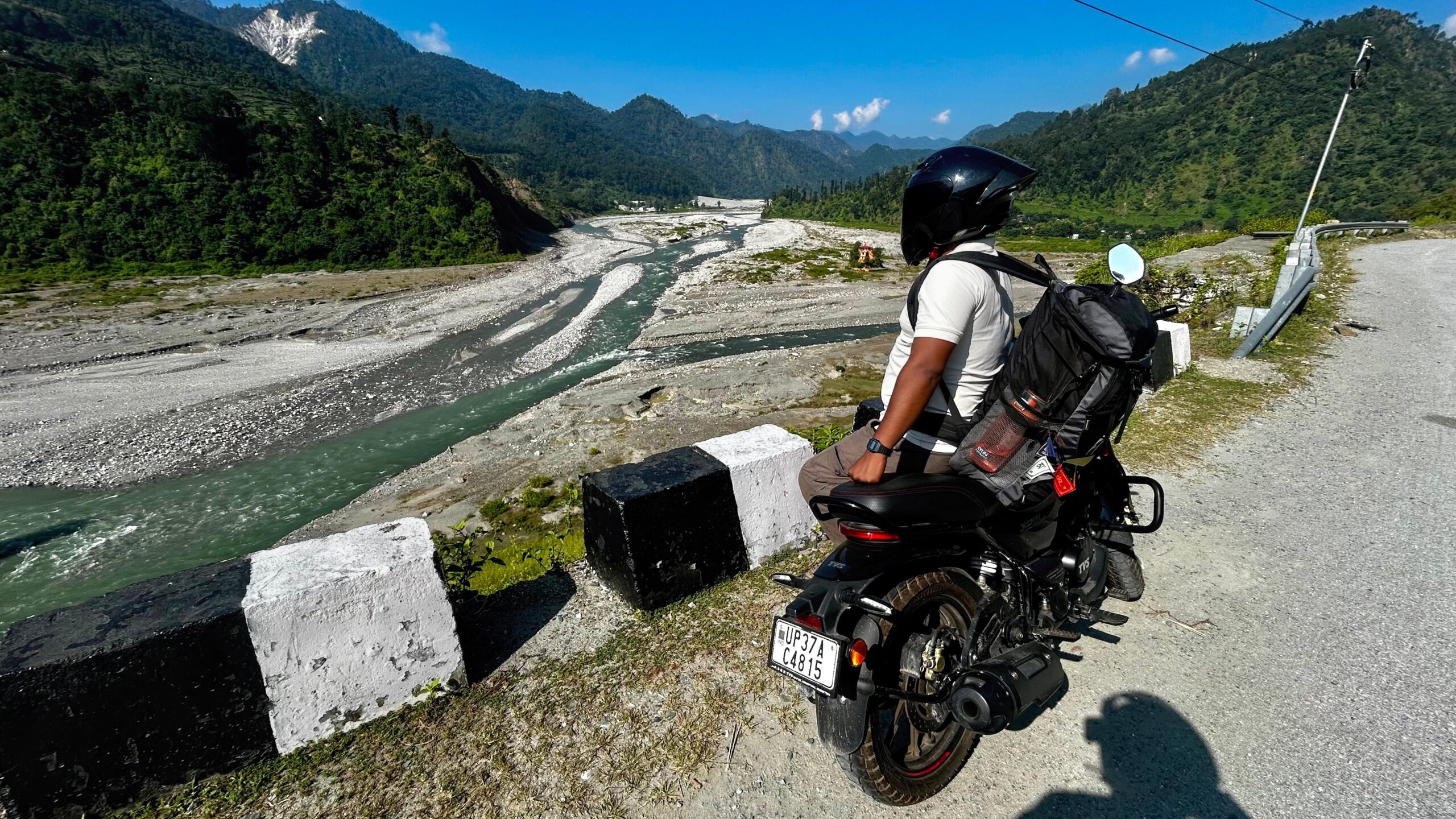
Have you ever dreamed of riding your bike through the beautiful Himalayas, surrounded by snow-covered mountains, deep valleys, rivers, and peaceful villages? If yes, the Adi Kailash and Om Parvat bike trip should be on your travel bucket list.
Located in the Pithoragarh district of Uttarakhand, Adi Kailash and Om Parvat are two of the most beautiful and spiritually important places in the Kumaon Himalayas. Every year, travellers, bikers, photographers, and pilgrims visit this region to experience its natural beauty and peaceful atmosphere.
Adi Kailash is also known as Chhota Kailash because it resembles the sacred Mount Kailash in Tibet. Om Parvat is famous for a natural pattern on its snowy mountain face that looks like the Hindu symbol ‘ॐ’ (Om).
For bike lovers, this journey offers a special combination of adventure, mountain views, challenging roads, and spiritual experiences.
In this guide, we will explain everything you need to know about planning an Adi Kailash and Om Parvat bike trip, including the route, best time to visit, permits, estimated budget, packing list, and safety tips.
Where Are Adi Kailash and Om Parvat Located?
Adi Kailash and Om Parvat are located in the remote Himalayan region of Uttarakhand, close to the India-China border.
The journey passes through the beautiful Kumaon region, including Dharchula and the villages of the Byas Valley.
Adi Kailash is associated with Lord Shiva and is visited by many devotees. Nearby, Parvati Sarovar and the sacred surroundings of Jolingkong add to the spiritual importance of the place.
Om Parvat is known for the natural formation resembling the symbol Om. The mountain can be viewed from the Nabhidhang area when weather and visibility conditions are favourable.
Both destinations are generally included in the same travel itinerary, but they are separate places and require visits to different areas of the valley.
Why Should You Plan an Adi Kailash and Om Parvat Bike Trip?
A bike trip to Adi Kailash and Om Parvat is not just about reaching a destination. It is about enjoying the entire journey.
Here are some reasons why this trip is special:
- Beautiful Himalayan views: Enjoy high mountains, valleys, rivers, and snow-covered peaks.
- Adventure riding: Experience remote mountain roads, sharp turns, and changing road conditions.
- Spiritual experience: Visit two important destinations associated with Lord Shiva.
- Peaceful villages: Explore traditional Himalayan settlements and local culture.
- Photography opportunities: Capture mountain landscapes, rivers, clouds, and unique natural formations.
- A memorable road trip: Experience the beauty of Uttarakhand away from crowded cities.
However, this is a remote high-altitude journey. It requires proper planning, suitable riding experience, and respect for local rules.
Best Time for an Adi Kailash and Om Parvat Bike Trip
Choosing the right time is very important because mountain weather can change quickly.
The travel season generally runs from May to October, depending on snowfall, road conditions, and government permissions.
May to June
These months are popular for visiting the region. Snow may still be visible on the mountain peaks, and the weather is often more suitable for travel than during the monsoon.
The roads can still be affected by snowmelt, landslides, or repair work.
July to August
The monsoon season is generally not recommended for this bike trip.
Heavy rain can cause landslides, falling rocks, road damage, and long delays. Some routes or permits may be temporarily suspended for safety reasons.
September to October
This is another good period to consider, especially if you want clear mountain views and opportunities for photography.
However, temperatures drop as winter approaches, and early snowfall can affect access to high-altitude areas.
Our recommendation: Consider May to June or September to early October, but confirm the current travel season and road conditions before booking anything.
Always follow the latest instructions from the district administration. Seasonal access is not guaranteed.
Adi Kailash and Om Parvat Bike Trip Route
The journey usually starts from a major town in Uttarakhand and continues towards Dharchula, an important base for travel into the Byas Valley.
A typical route is:
Delhi → Haldwani or Kathgodam → Almora → Pithoragarh → Dharchula → Tawaghat → Gunji → Adi Kailash and Om Parvat viewpoints
The exact route and overnight stops can change depending on road conditions, permits, accommodation availability, and the itinerary approved for your trip.
Route Breakdown
1. Delhi to Haldwani or Kathgodam
If you are starting from Delhi, your first major destination can be Haldwani or Kathgodam. You can begin your bike journey from here or travel directly towards the Kumaon hills if you are comfortable with a longer first day.
2. Haldwani to Pithoragarh
This stretch takes you through the hills of Kumaon. Enjoy the changing scenery, but avoid rushing through mountain bends. Plan enough time for fuel, food, and rest breaks.
3. Pithoragarh to Dharchula
Dharchula is an important town for travellers heading towards Adi Kailash and Om Parvat. It is a good place to organise permits, check the weather, arrange local guidance, and prepare for the remote section of the trip.
4. Dharchula to Gunji
The route becomes more challenging as you move deeper into the mountains. Road conditions may include broken surfaces, narrow sections, landslide-prone areas, and construction work.
Follow local instructions and allow extra time for this stretch.
5. Gunji to Adi Kailash
From Gunji, travellers head towards Jolingkong and the Adi Kailash area, where Parvati Sarovar is one of the important attractions.
6. Gunji towards Om Parvat
The Om Parvat viewpoint is approached through the Kalapani and Nabhidhang side of the route, subject to current access rules.
Remember that Adi Kailash and Om Parvat are not the same location. Your itinerary should include enough time to visit both.
Important: Do not assume that every road is open to private motorcycles. Confirm the permitted motorcycle route, current road access, and any restrictions with the local administration before departure.
How Many Days Are Required for the Bike Trip?
For a bike trip starting from Delhi, planning around 7 to 9 days is a reasonable starting point. You may need more time if you want to explore slowly or if weather and road closures cause delays.
Here is a sample itinerary:
| Day | Travel plan |
|---|---|
| Day 1 | Delhi to Haldwani or Kathgodam |
| Day 2 | Haldwani to Pithoragarh |
| Day 3 | Pithoragarh to Dharchula |
| Day 4 | Dharchula to Gunji, subject to access and road conditions |
| Day 5 | Visit Adi Kailash and Parvati Sarovar |
| Day 6 | Visit the Om Parvat viewpoint |
| Day 7 | Return towards Dharchula |
| Day 8 | Travel towards Pithoragarh or Haldwani |
| Day 9 | Return to Delhi |
This is only a planning example, not a guaranteed day-by-day road schedule. You may need additional days for acclimatisation, permits, medical checks, weather delays, or road closures.
Avoid planning the trip so tightly that you have to ride long hours on difficult mountain roads.
Is the Adi Kailash and Om Parvat Route Suitable for Bikes?
Yes, motorcycle travel can be possible on accessible sections of the route, subject to current restrictions and road conditions. However, this is not an ordinary highway road trip.
You may encounter:
- Narrow mountain roads and sharp bends.
- Loose gravel, mud, and broken road surfaces.
- Water crossings or flowing streams in some sections.
- Landslide-prone stretches and falling rocks.
- Cold weather, rain, fog, and sudden visibility changes.
- Long distances between reliable fuel or repair facilities.
A motorcycle with good ground clearance, reliable tyres, and sufficient power is helpful. More importantly, the bike must be in excellent mechanical condition.
You do not necessarily need the biggest or most expensive adventure motorcycle. A well-maintained bike that you know how to handle is often a better choice than an unfamiliar machine.
If you are a beginner, gain experience riding in the mountains before attempting this route.
Permits Required for Adi Kailash and Om Parvat
This is one of the most important things to understand before planning your trip.
Adi Kailash and Om Parvat are located in a sensitive border region. Travellers generally need an Inner Line Permit (ILP) to enter the restricted area.
Permit procedures, validity, document requirements, medical checks, and entry conditions can change between seasons.
Before leaving home:
- Check the latest instructions issued by the Pithoragarh district administration.
- Confirm where and how the current Inner Line Permit is issued.
- Ask whether separate registration or medical fitness documentation is required.
- Confirm whether private motorcycles are permitted on your intended route.
- Carry your original identification documents and the required permit copies.
- Follow all check-post instructions and restrictions.
Do not assume that a regular driving licence, motorcycle registration certificate, or standard travel insurance replaces an Inner Line Permit.
Estimated Budget for an Adi Kailash and Om Parvat Bike Trip
The total cost depends on your starting point, bike mileage, fuel prices, accommodation, food, trip duration, and any local transport or guide arrangements.
For a self-planned trip starting from Delhi, you can use the following figures as an initial budgeting example.
| Expense | Estimated cost per person |
|---|---|
| Fuel | ₹3,000–₹5,000 |
| Food and drinking water | ₹2,500–₹4,000 |
| Accommodation | ₹3,500–₹7,000 |
| Permits, documentation and local charges | ₹500–₹2,000 |
| Bike maintenance and emergency reserve | ₹2,000–₹4,000 |
| Miscellaneous expenses | ₹1,000–₹2,000 |
| Estimated total | ₹12,500–₹24,000 |
These are illustrative planning estimates, not verified current prices. They assume a budget-conscious trip and do not include every possible expense, such as motorcycle rental, major repairs, specialised insurance, or an extended stay.
Actual costs can be higher, particularly if you travel alone and pay for single-room accommodation.
Before finalising your budget, calculate the distance for your actual itinerary, check current fuel prices, and confirm accommodation and permit-related charges locally.
What Should You Pack for the Bike Ride?
Packing properly can make your Himalayan journey safer and more comfortable.
Riding Gear
- A certified full-face helmet.
- Riding gloves.
- A protective riding jacket and trousers.
- Riding boots with good grip.
- Knee and elbow protection.
- Waterproof riding gear.
Clothing
- Warm thermal layers.
- Fleece or insulated jacket.
- Windproof outer layer.
- Extra socks and gloves.
- Comfortable clothes for accommodation.
Documents
- Valid driving licence.
- Motorcycle registration certificate.
- Valid insurance and pollution certificate, as applicable.
- Government-issued identification.
- Required Inner Line Permit and other travel documents.
Essential Items
- First-aid kit and personal medicines.
- Power bank and charging cables.
- Offline maps.
- Reusable water bottle.
- High-energy snacks.
- Sunglasses and sunscreen.
- Basic puncture-repair equipment and a tyre inflator, if suitable for your motorcycle.
- A small toolkit and emergency cash.
Carry only what you need. Excess luggage can make handling your motorcycle more difficult on narrow and uneven roads.
Safety Tips for the Adi Kailash and Om Parvat Bike Trip
Your safety should always come before reaching a destination.
1. Ride slowly on difficult roads. Loose stones, gravel, water, and sharp turns can cause sudden loss of traction.
2. Check your motorcycle before departure. Inspect the tyres, brakes, chain, lights, battery, clutch, and engine oil.
3. Avoid riding after dark. Poor visibility, falling rocks, and unexpected road damage make night riding especially risky.
4. Keep an eye on the weather. If heavy rain or a landslide warning is issued, stop at a safe location and follow local instructions.
5. Allow time to adjust to altitude. The route reaches high elevations, where some people may develop altitude-related illness. Avoid rushing your ascent, and do not ignore headaches, nausea, dizziness, or unusual weakness. Severe symptoms, especially breathlessness at rest, confusion, or difficulty walking straight, require urgent medical attention and descent with assistance.
6. Keep enough fuel. Do not assume that petrol pumps will be available at every stop. Plan your fuel requirements in advance and verify the availability of fuel along the route.
7. Do not ride beyond your skill level. If a road section looks unsafe or beyond your ability, stop and seek local advice rather than taking unnecessary risks.
8. Respect border restrictions. Never cross barricades, enter restricted areas, or photograph sensitive installations where prohibited.
9. Protect the environment. Carry your rubbish back with you, avoid single-use plastics where possible, and respect local communities and religious sites.
10. Keep an emergency buffer. A spare day or two can be valuable if roads close or weather conditions change.
Places to Visit During the Trip
The journey offers several places worth exploring, depending on your route and the permissions available.
1. Adi Kailash
Adi Kailash is the main attraction for many pilgrims and mountain travellers. The mountain is admired for its dramatic Himalayan setting and its spiritual connection with Lord Shiva.
2. Parvati Sarovar
Parvati Sarovar is a sacred lake near the Adi Kailash area. Its peaceful surroundings and mountain backdrop make it an important stop for visitors.
3. Om Parvat
Om Parvat is famous for the natural formation that resembles the sacred Om symbol. Clear weather is important for a good view, so allow flexibility in your itinerary.
4. Gunji Village
Gunji is an important settlement and travel base in the Byas Valley. It can serve as a useful overnight stop, depending on the approved itinerary and accommodation availability.
5. Dharchula
Dharchula is an important town on the route and a practical place to organise the next stage of your journey. You can also experience the local market and views of the surrounding mountains.
Food and Accommodation on the Route
Accommodation options in the remote valley are more limited than in major tourist towns. Depending on the season and approved itinerary, travellers may find homestays, guesthouses, lodges, or designated accommodation facilities.
Do not expect luxury hotels at every stop. It is better to plan for basic facilities and confirm your overnight arrangements in advance.
Food availability may also be limited in remote areas. You can generally expect simple meals where facilities are operating, but choices may be fewer than in larger towns.
Carry some snacks and drinking water, and avoid depending entirely on shops being open when you arrive.
Mobile Network and Internet Connectivity
Mobile connectivity can be unreliable as you travel deeper into the mountains.
Do not depend on continuous internet access for maps, online payments, calls, or permit information.
Download offline maps before departure, inform family members about your itinerary, and carry enough cash for areas where digital payments may not work.
Check current network coverage with your accommodation provider or local travel operator before leaving Dharchula.
Frequently Asked Questions (FAQs)
1. Can I visit Adi Kailash and Om Parvat on my own bike?
Motorcycle travel may be possible on permitted sections of the route. Confirm current restrictions, road access, and Inner Line Permit requirements before starting.
2. Is the Adi Kailash and Om Parvat bike trip difficult?
It can be challenging because of high altitude, narrow mountain roads, changing weather, and remote facilities. Riders should have mountain-riding experience and a well-maintained motorcycle.
3. What is the best month for the trip?
May, June, September, and early October are commonly considered for this journey, subject to weather, road access, and official permissions. The monsoon season is generally best avoided.
4. How many days do I need from Delhi?
Plan around 7–9 days as a starting point, with additional time if you want a relaxed journey or need to account for weather delays.
5. Do I need a permit for Om Parvat?
An Inner Line Permit is generally required for access to this restricted border region. Confirm the current rules with the district administration before travelling.
6. Can beginners do this bike trip?
Beginners should first gain experience on mountain roads. The remote route, high altitude, and unpredictable road conditions can make it unsuitable for riders without adequate preparation.
7. Is fuel available throughout the route?
No. Fuel availability in remote areas should never be assumed. Plan your range carefully and verify fuel availability before entering longer remote stretches.
8. Is this trip suitable for a pillion rider?
It may be possible, but a pillion rider adds weight and changes motorcycle handling. Both riders should be comfortable with mountain travel, and luggage should be kept manageable.
9. Can I complete both destinations in one trip?
Yes, travellers commonly combine Adi Kailash and Om Parvat in one itinerary. However, the two destinations are reached through different parts of the valley, so sufficient time and the required permissions are essential.
Final Thoughts
The Adi Kailash and Om Parvat bike trip is a wonderful option for people who love mountains, road adventures, and peaceful spiritual destinations.
From the winding roads of Kumaon to the remote villages of the Byas Valley, every part of the journey offers something different. The experience becomes even more special when you finally see Adi Kailash and the natural Om formation on Om Parvat.
However, this is not a trip to complete in a hurry. Plan your route carefully, prepare your motorcycle, arrange the necessary permits, and stay flexible when weather or road conditions change.
Ride responsibly, respect the mountains, and focus on enjoying the journey rather than simply reaching the destination.
Have you already planned your Adi Kailash and Om Parvat bike trip? Share your questions, experiences, or travel tips in the comments and help other riders prepare for their Himalayan adventure.